


We’re back for Part Two of our deep dive into the vivid, surreal, and animated artwork of Adriana Quezada. If you missed Part One, you can read it here. The full interview is available to listen to or watch here.
Atticus Review added Adriana to our small team this year to illustrate our NFTs. If you don’t have any idea what I’m talking about, you can learn more about our NFT literary project in previous newsletters. Briefly, we’re now presenting the literary magazine, which has been going for upward of fifteen years, in two digital formats. You can read stories, poems, and creative nonfiction on the Atticus Review website. But also, we are developing a marketplace for literary NFTs.
So far, Adriana has made two NFT collections for us, with three more planned before the end of the year, or as we call it, the season. Adriana and the Atticus staff talked about the two batches she has completed and explored the ways that illustrating NFTs is different from traditional illustration.
Boo Trundle: Let’s start with “The Breadwinner” by Meg Thompson, short fiction that Atticus Review published in February. Here are the four rough sketches you presented:
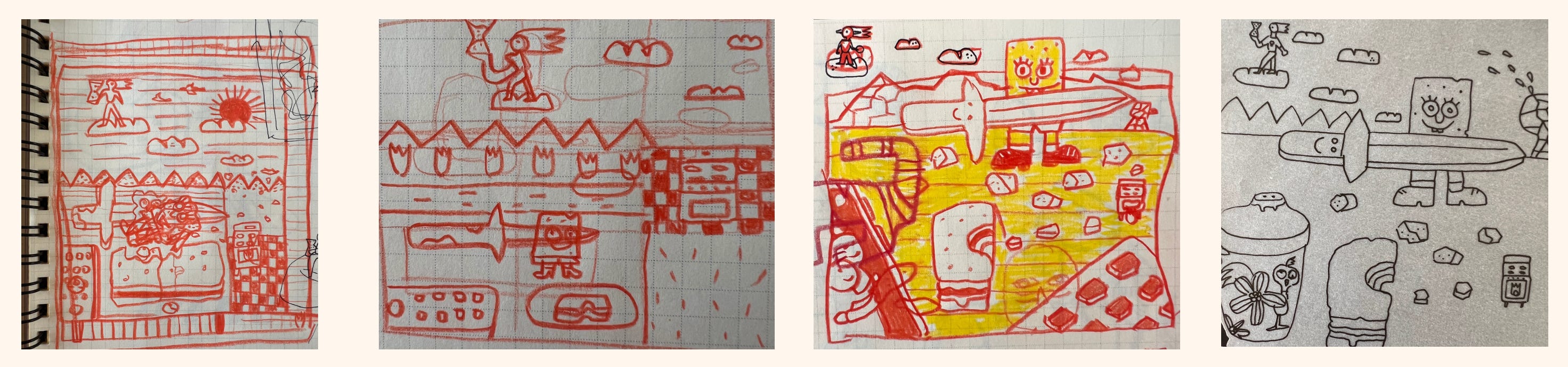
Adriana Quezada: When I look at these sketches, they look similar at first. But every little element counts. I tried to make a very simple image. The NFT is on the smaller side, so it’s important that it doesn’t have too many elements.
When you’re illustrating something, the first thing you do is read the story once, and then twice, and then three times, or maybe four. And then it starts something happening in your brain. Your brain is interacting with your background and whatever you’re living in the moment. It’s right then and there when you can start making an idea of what you want to say with the image.
I came up with this idea of illustrating a little living room table that has elements of a family life. The kids and the crumbles and the little soldiers. A symbol of the battles that are taken, and the battles that are left on the side, because you’re in other battles. You cannot fight every battle in life. You’re going to have to leave some on the side. And I added playful elements of having children and their everyday life in a home.
We have the main character here, which is The Breadwinner.
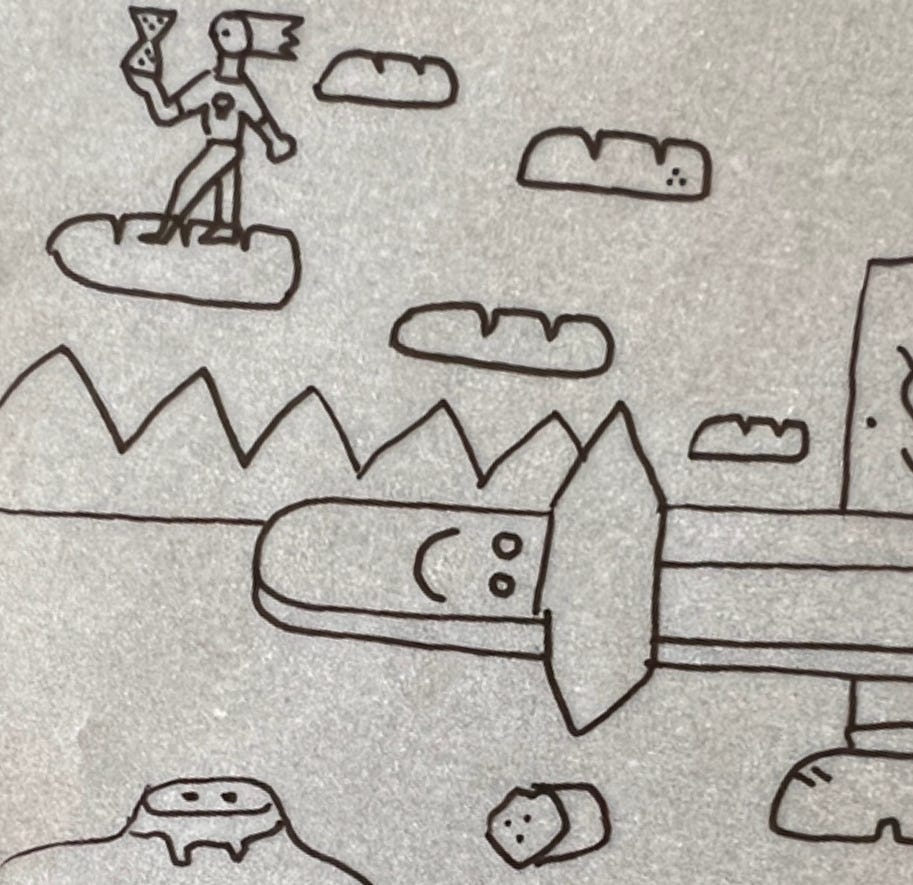
She’s rising above all those things that are so important and so consuming at the end, too. She’s winning, and it doesn’t seem like it was easy at all to get it right with the sourdough bread-making process.
BT: Or the mothering process. Let’s see the finals.
AQ: This is the main image that I made. You can see the character, the Breadwinner. I refined the shapes. You can see here, her hair with the velocity, it’s a familiar shape.
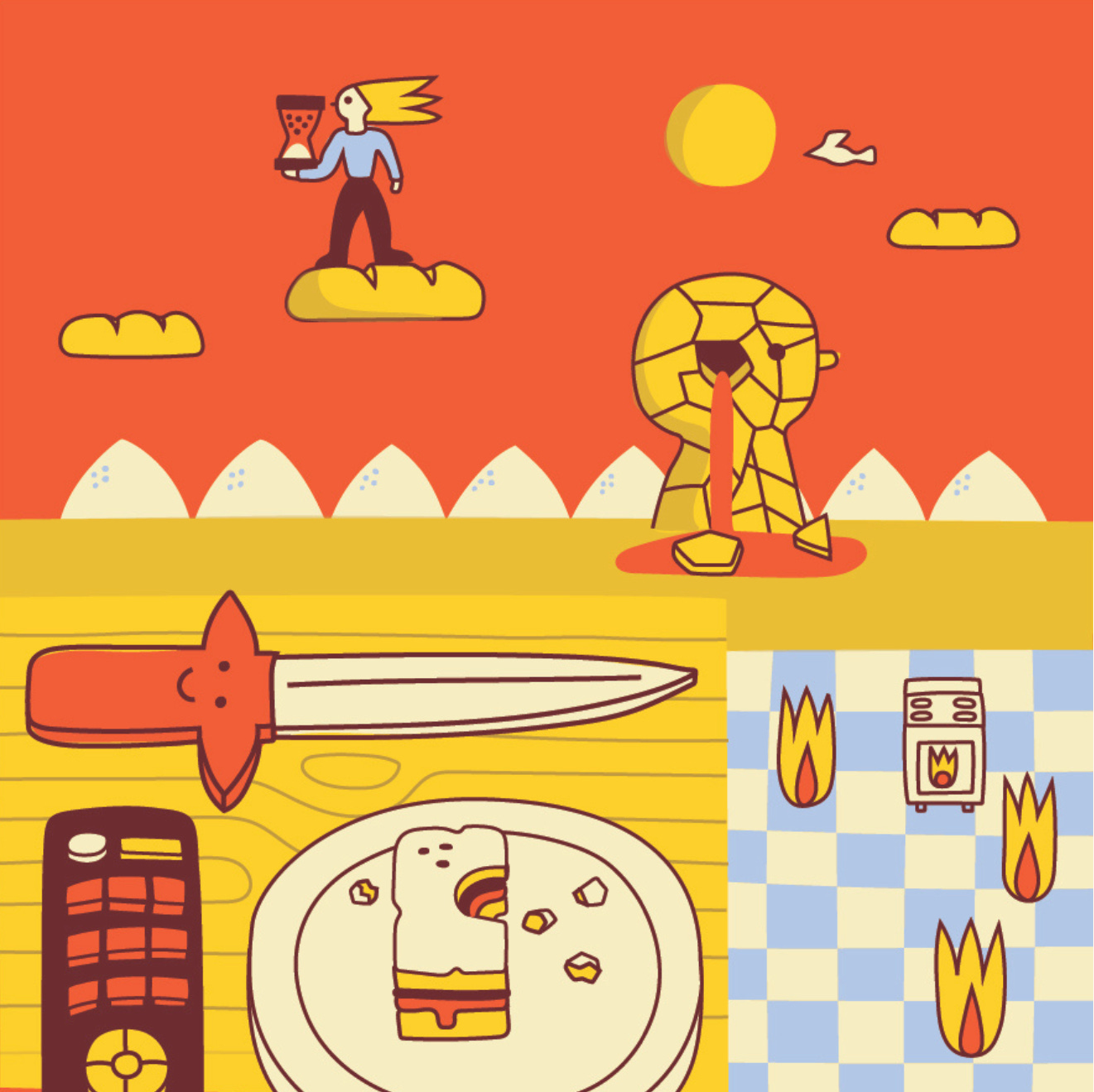
BT: I love the fact that she’s racing around on bread loaves. Which is strangely a literary reference, because there’s a literary conference called Broadleaf. That’s not relevant here, but we did talk about it in our last webcast.
AQ: These are little mounds of flour in the logo background. It’s not super noticeable. But that’s okay because maybe you notice it later.
BT: I thought you said mountains! And they also look like mountains. But yes, little mounds of flour. I’d like to comment on the statue in the background that’s cracking. What is that actually? It looks like a monument.
AQ: It makes a reference to the husband. The daughter of the main character has a dream where he cracks somehow. That’s a powerful image. The male figure is somehow cracking.
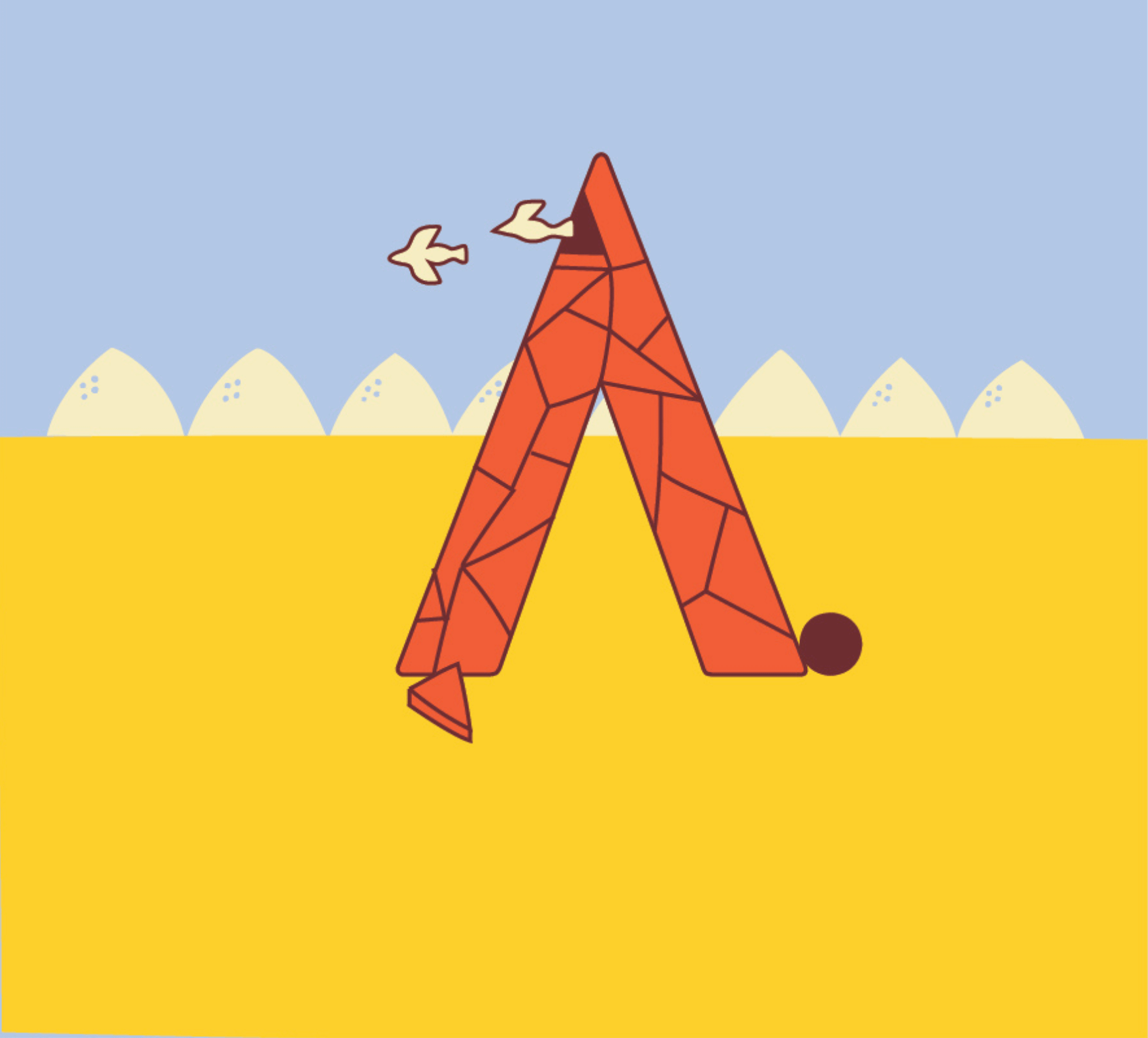
BT: I love the fact that the logo is also cracking. The visual callback. Very cool.
AQ: Here’s the entire collection. You can see that it’s mostly the same image, but I did make a few tweaks. For example, in the floor or the clothes.
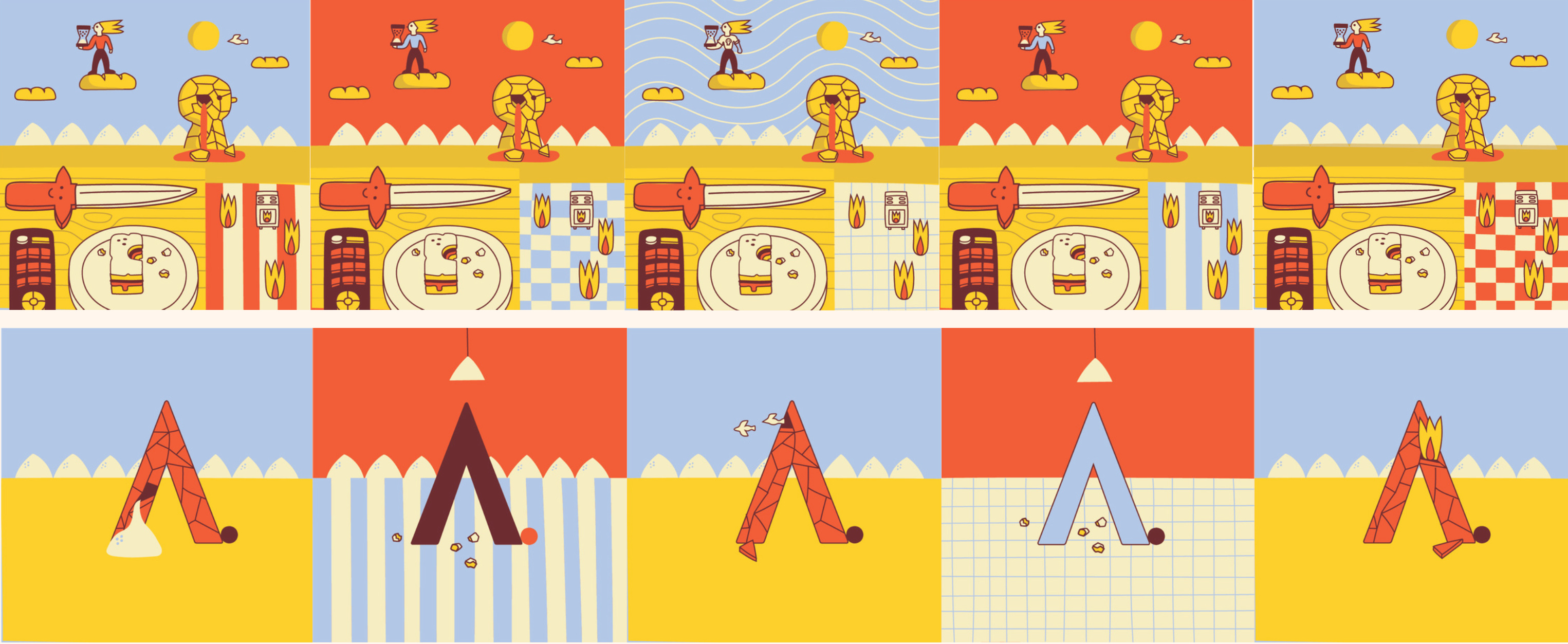
David Olimpio: We asked Adriana to do this type of near-cloning because of the NFT tradition. The convention is to have a lot of different versions of one unique drawing. A series, with slight changes.
AQ: I have a little bit of something different going on in each image.
BT: We can look at that NFT common practice again by spending time with Adriana’s illustrations for The Deep Field, a piece of creative nonfiction by Steven Swiryn that Atticus Review published in April. It’s about outer space.
AQ: This was an example of when you have to read the text four times. The first time I read it I thought, “No, I won’t be able to do this.” But then I read it again, and read it again, and things started happening inside of me and I thought, “I see! I see what what’s happening here. Or at least I think I understand.”
It’s a very scientific assignment for a person who knows nothing about space. So at the end, it was a gift, because I got to realize the complexity—things that you don’t stop and think about when you’re so busy with life and work. This is written by a person who enjoys looking at space and the stars, and finding out everything that there is to know about space, and all the uncertainty, too. He speaks about data, yes, but the uncertainty, too, and how the numbers are so relative because you’re talking about distances that you cannot even fathom.
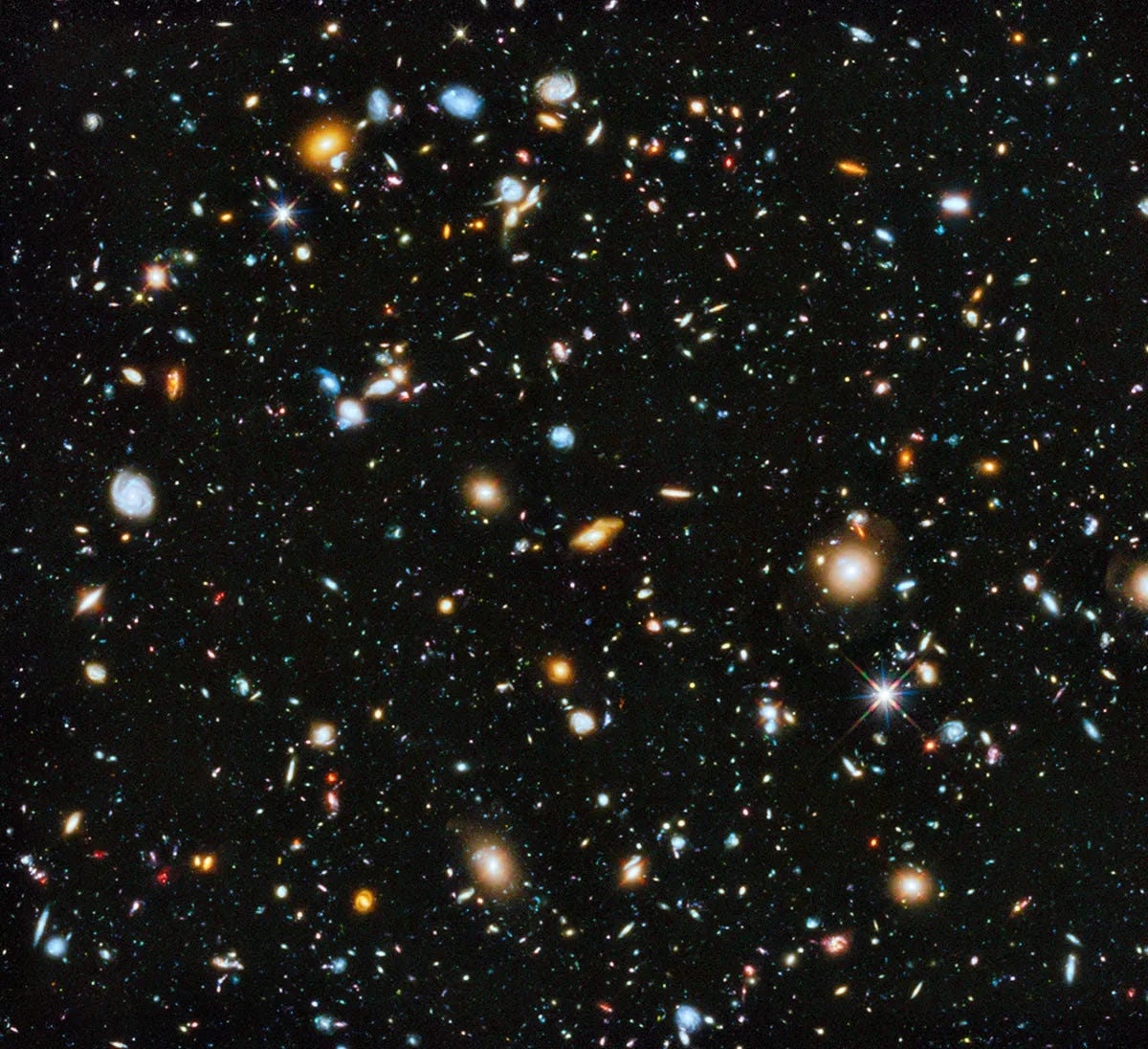
BT: This essay starts with the photograph that the Hubble Space Telescope took of the deep field, which is the space behind space. I can understand why you’re reading it and thinking, “What in the world am I going to do to illustrate this?” Space is amorphous, gaseous. You brilliantly brought line into this scene. There’s no line in space!
AQ: At the end I enjoyed it very much. Here are the sketches that I made:
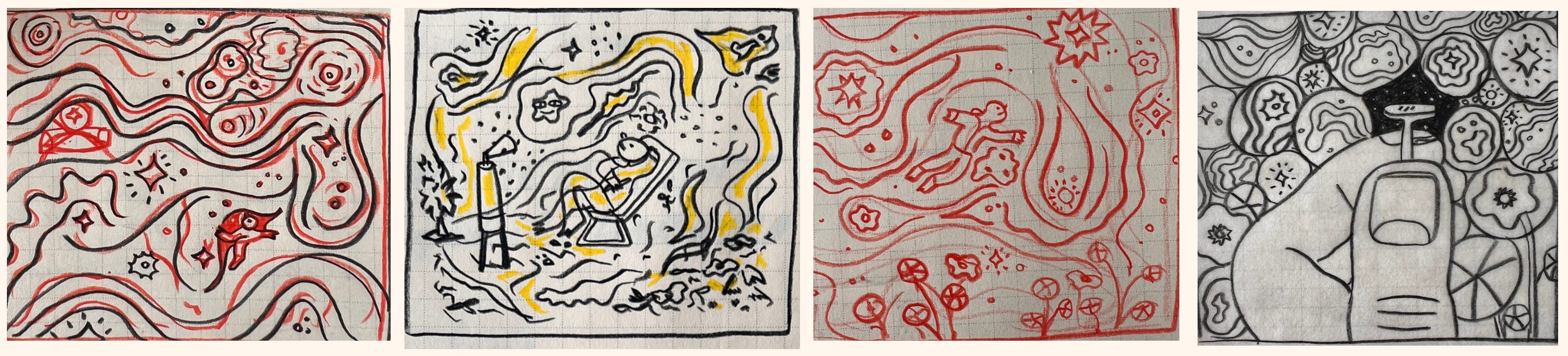
Everything’s happening. You don’t have defined borders for things, but I had to make some. I wanted to make something very colorful. You can take a first look at space or at the sky at night and all you see is dark, right? Maybe the first thing that a person would think about is: “it’s black.” But then you pay attention, and then you pay more attention, and then you go again and you discover all these things that are happening.
BT: In “The Deep Field,” Steven Swiryn talks about the galaxies, and his garden, his telescope, but also the vastness of the deep field. This final drawing references perspective. I feel that’s what the piece really is about: perspective. And with the deep field way out there past the thumbtack, you handled the theme well.
AQ: Perspective, yes.
BT: So let’s look at the final illustration for the NFT.
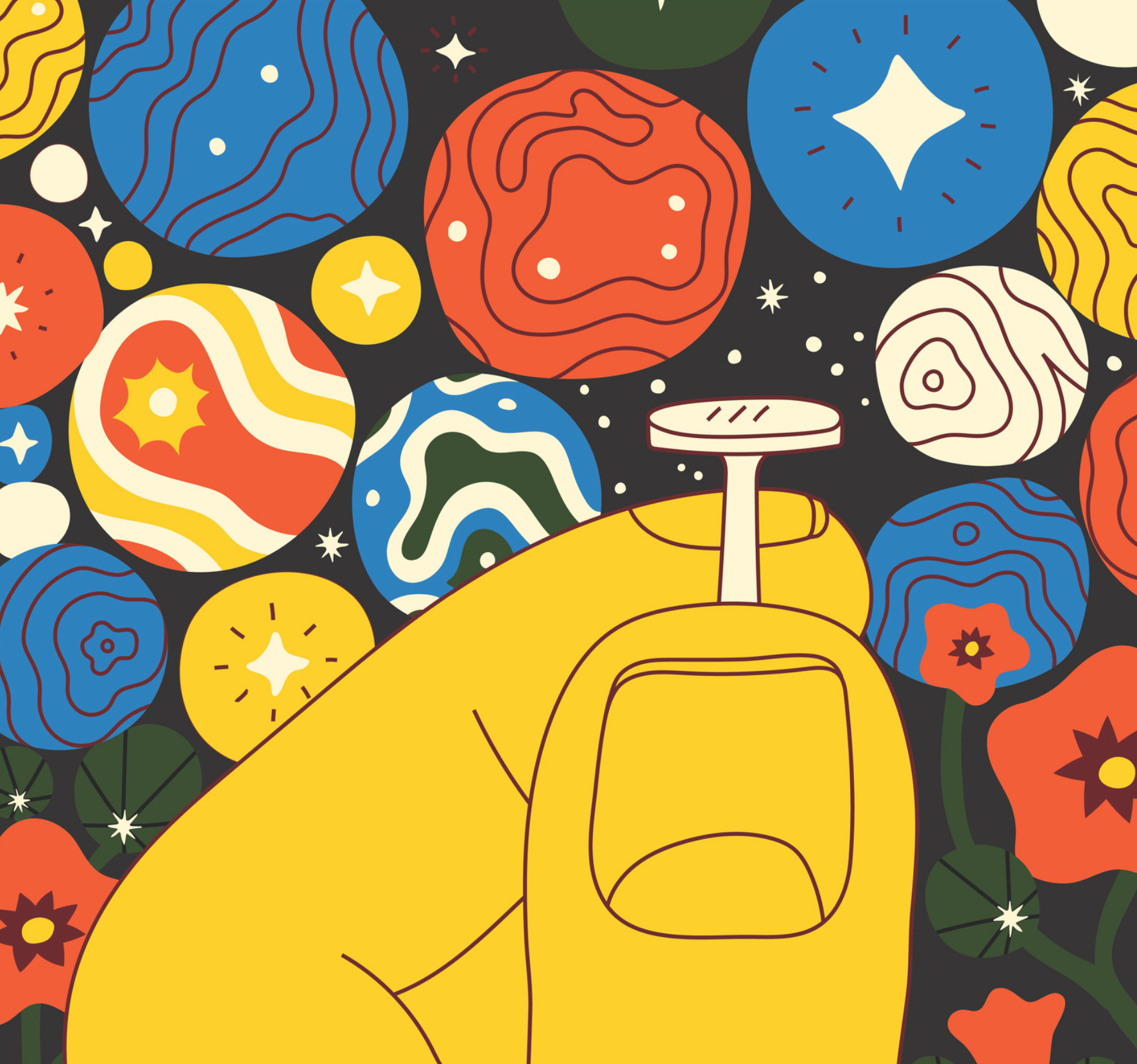
AQ: This is more color than I’m used to; but it was a nice challenge. I tried to balance them out. I always do this. It’s not just about throwing color, but it’s also trying to balance it out so it’s not overwhelming. It can get too festive, so I always try to balance out whatever colors I’m using with creams, with grays, with blacks. Just to tone it down or give it a little bit of earth.
BT: Quick nod to David Olimpio. He designed the stylish Atticus Review logo that Adriana is having so much fun with. I love seeing the logo floating around in the deep field with the stars and planets.
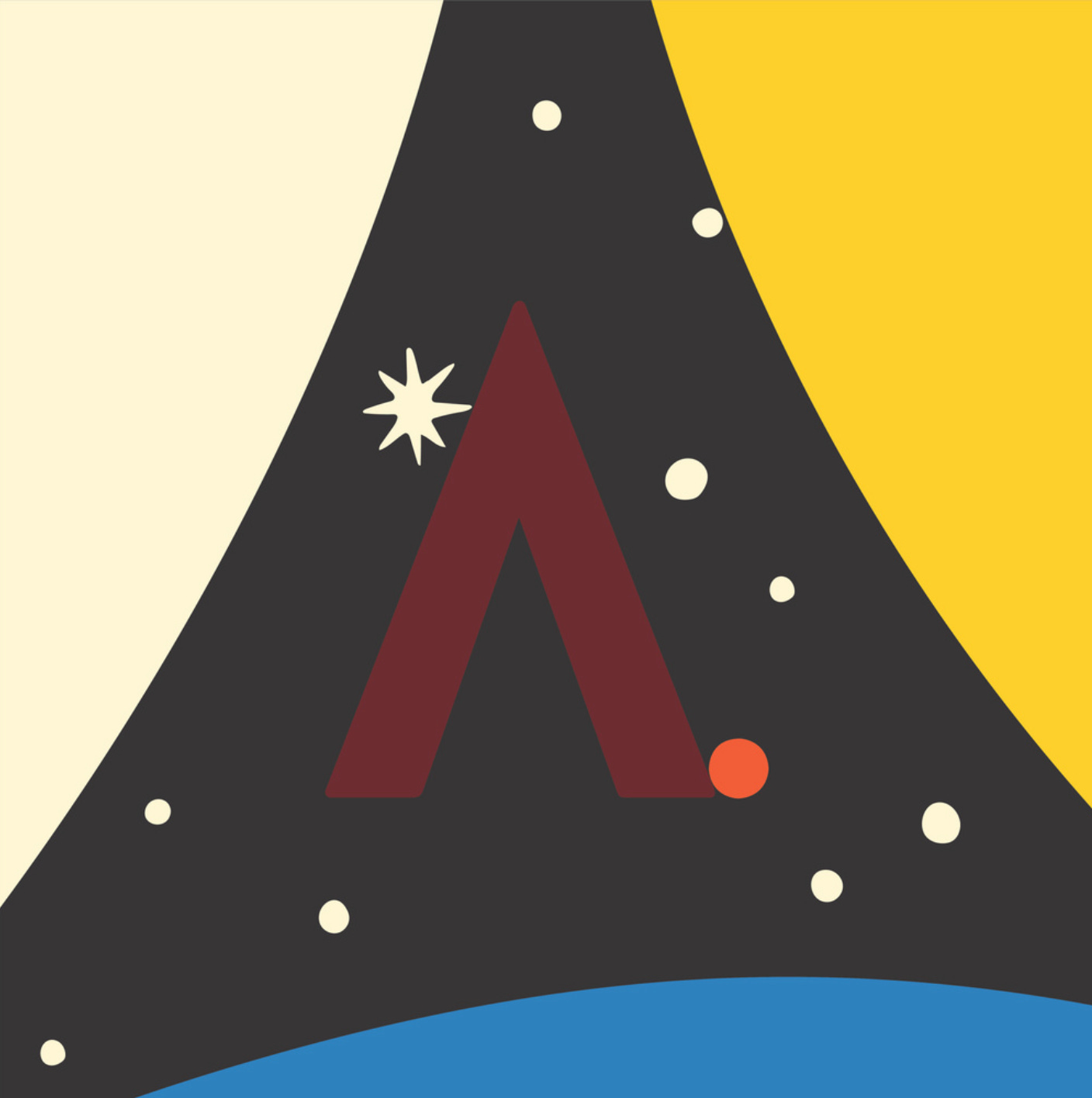
DO: Me, too. I love all the different versions of it. The Atticus Review logo started out in the beginning back in 2011 as something kind of different, but also a very powerful logo. It had allusions to To Kill a Mockingbird in it. That was part of where the name of the magazine came from. But I liked moving to this more modern logo.
BT: It parties well. You can take it out and put it in different outfits and it always looks good.
DO: Dress it up. Or down.
AQ: Simple, but it’s also striking in a way. You have all these lines and these little angles happening, and the little pop of color.
BT: Before we finish, I want to make another pitch for opening a crypto wallet and investing in these NFTs: The Deep Field and The Breadwinner. The technology is a bit lagging, in terms of how the team at Atticus Review sees it playing out in the future. But we’re making a sincere effort to generate direct royalties without a middle man like a gallery or a publisher. It’s hard to make ends meet as an artist or a writer, and there’s a DIY finance model inherent to cryptocurrency. The idea is for the audience or digital collector to pay the artist directly by making an NFT purchase. You can read more about it here.
AQ: I think the whole NFT concept is great for artists, because you can maybe get royalties at some point. You can attract people that are interested in your work, or want to support what you do, and you can build also a stream of revenue from there. That definitely helps you to support your work.
BT: That’s a theme that we go back to quite often at Atticus Review. We’re exploring NFT technology partly because it offers the opportunity for literary writing to accrue value on an open market the way that a painting would, or a trading card, depending on the writer’s popularity, or if the piece goes viral.
So get yourself a crypto wallet! For about ten bucks (at current value of Cardano) you can buy unique digital rights to illustrated creative writing, NFTs with original artwork by Adriana Quezada, who is our featured artist this year. You can see more of her art on her website.
Big thanks for Adriana for talking to us on zoom.
You can listen to/watch this entire interview here:
