


We couldn’t talk Portugal-based writer Andrei Romanov into doing a zoom interview with us, which is completely understandable. Romanov wants the focus to be on the work, “Nani, Nani at 340 Hz,” a meditation on song, data centers, and the irretrievable loss of leaving early childhood and the comfort of “mother.”
We chose this piece of short fiction (quick read!) from a healthy and impressive submission pool. This month’s offering is once again beautifully illustrated in series form by artist Adriana Quezada.
Read, enjoy, and collect!

It’s maybe a stretch to compare the hum of a building full of data processors to the comfort of a mother’s song, but the poetry in the bridge between them resonated for the editorial team at Atticus Review. We assumed Romanov’s submission was creative nonfiction. We were wrong. Romanov informs us that “Nani, Nani at 340 Hz” is fiction. Still, it’s compelling to read this first-person account of what it (might be) like inside the humming, electric belly of AI.
“Nani, Nani at 340 Hz” rose to the top of submissions for the theme Song, not only because of the writing style, but also because of the topic. Did the author write a new piece that intentionally matched not only our theme but also the dark dreams and associations of our blockchain-journal? If so, the approach worked.

There are hints of guilt and dread in the confessions of this story’s narrator, who makes his living by tending to a flock of machines that “sweat pure electricity.” In 2024, when we first shifted Atticus Review to a blockchain digital-asset model, alarmed members of our community lumped blockchain and AI together as energy-sucking grid drainers. We presented our theories about sucking the grid, at least as far at the blockchain goes, in a newsletter, “Our Rebirth On the Blockchain,” under the subheading, “The Elephant in the Room.” You can read it here.

An elephant in a room sounds manageable compared to the looming mushroom cloud of AI and the data centers that fuel it. AI domination happened quickly, at least from where I sit. I wonder now, almost two years after we posted that newsletter, whether our readers have started using AI for convenience and efficiency? I doubt there are many who haven’t at least flirted with it; others might be in a committed, monogamous relationship. Are there any AI abstainers out there? Pure, stubborn, and untainted?
Moving beyond the takeover of robots, Atticus Review is excited to present international work by Romanov, a Romanian-born author writing in Europe. Taking a global view comes naturally to our illustrator-in-residence, Adriana Quezada. She went deep on Romanian folk art to find inspiration for her designs.
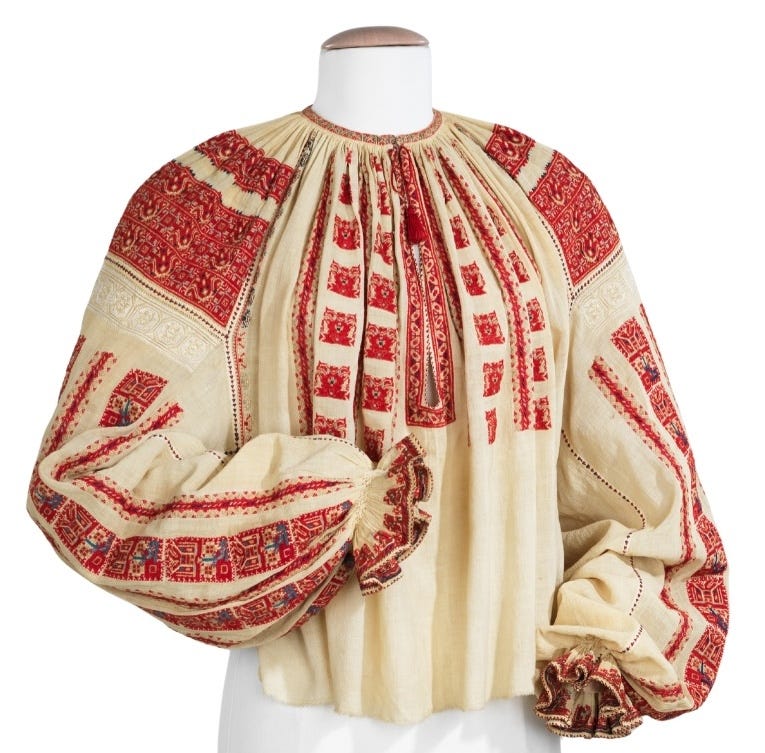
The colors and shapes, as well as the borders around Quezada’s images reference the traditional, embroidered clothes of Romania. These garments carry sacred symbols and personal histories in the threads. The embroidery on a blouse might tell the story of the wearer’s life: age, marital status, region, even social rank. Geometric shapes may represent sky gods and cosmic powers. Adriana tried to incorporate these colors, shapes, and symbols into her digital design. This is a nod to the ever-widening gap between our digital day-to-day and our rich, tactile analog ancestry.
For information on how to create a wallet and purchase the token for “Nani, Nani at 340 Hz,” we have tutorials to guide you through the process. To learn more about our new publishing model you can read our past newsletters and our blog.
Boo Trundle
Editor-in-Chief